Mogra has a fragrance that's hard to confuse with anything else. It's sweet, floral and a little rich, but there's something familiar about it too. In India, the smell of jasmine often brings to mind summer evenings, flowers tucked into a woman's hair, a freshly decorated puja room, or a string of white blossoms bought from a local flower seller.
For many families, flowers aren't just something to put in a vase. They're part of everyday life. We use them during prayers, offer them at temples, decorate our homes for festivals and carry them along when visiting someone for a special occasion. Mogra, also known as Arabian jasmine, has its own place in these traditions.
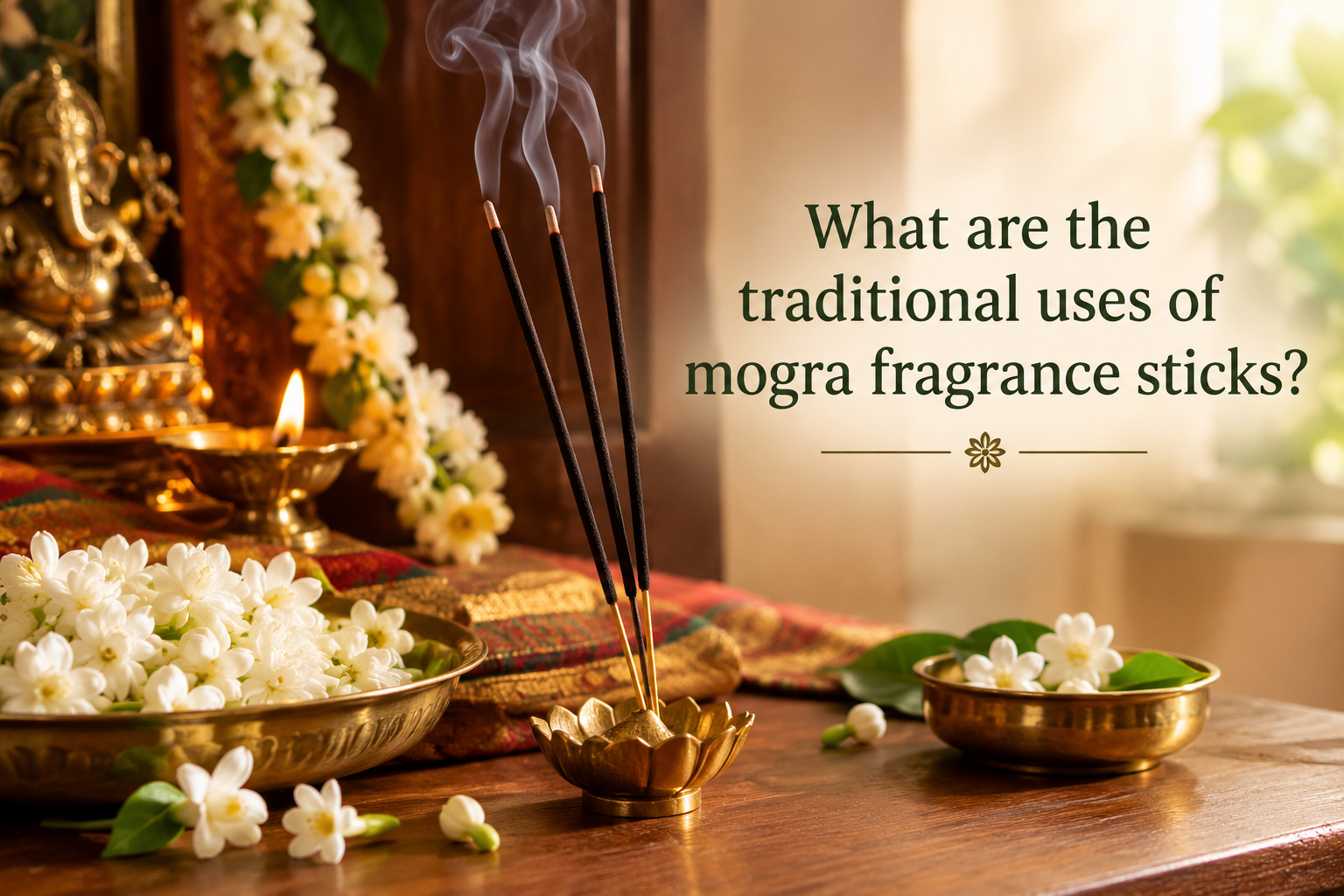
Mogra fragrance sticks offer a simple way to enjoy a similar floral scent indoors. They're not the same as fresh flowers, of course, but they can bring a familiar jasmine-inspired fragrance into a prayer room, living area or quiet corner of the house.
So, how have people traditionally used mogra fragrances, and where do incense sticks fit into these customs?
Mogra Fragrance Sticks and Daily Puja
In many Indian homes, the day begins with a few familiar rituals. Someone cleans the area around the home temple, changes the flowers, lights a diya or offers a short prayer before getting on with the day's work.
Incense is often part of this routine.
Some families prefer sandalwood, while others enjoy rose or jasmine fragrances. Mogra is a natural choice for people who like floral scents and want something different from the usual woody incense.
A stick may be lit before prayers begin or while offering flowers to a deity. For some households, it's simply part of the routine they've followed for years. There's no complicated reason behind it. The fragrance belongs to a moment they want to set aside for prayer.
Of course, customs vary from one family to another. Mogra isn't compulsory for puja, and many people prefer fresh jasmine flowers instead. The choice generally comes right down to private preference and own family subculture.
Why Jasmine Flowers Are Special in Indian Traditions
To understand the attraction of mogra incense, it enables to look at the plant life themselves.
Walk through a flower market in many Indian towns during the warmer months and you'll often find strings of jasmine buds alongside marigolds, roses and other seasonal flowers. Mogra is particularly popular for making gajras, the small floral strings traditionally worn in the hair.
It's also used in garlands, religious offerings and decorations for family celebrations.
There's something lovely about these flowers. They're small, white and fairly simple to look at, yet their fragrance can be noticeable even when the flowers are arranged in a modest string. Fresh mogra is especially associated with warm evenings, weddings and traditional celebrations in many parts of India.
Fragrance sticks draw on this familiarity. Rather than using fresh flowers, people can enjoy a jasmine-inspired aroma in their homes whenever they like.
It's worth making one distinction, though. A mogra incense stick doesn't necessarily contain actual mogra flowers. Some products use fragrance blends designed to recreate the smell of jasmine. Checking the ingredients is the best way to understand what you're buying.
A Fragrant Addition to the Evening Prayer Routine
Evenings have a different feel from mornings. The day's work begins to wind down, family members return home, and in some households, it's time to light the diya and sit for a few minutes of prayer.
Mogra fragrance sticks can be used during this part of the day, particularly by people who enjoy a sweet floral aroma.
You might see incense used alongside fresh flowers, a small lamp and other items kept in a home temple. The fragrance becomes part of the surroundings while prayers are offered.
Not everyone follows the same routine. Some humans light incense each evening, at the same time as others keep it for specific days or non secular occasions. There also are households in which incense isn't used in any respect.
What topics is that those practices regularly convey personal that means. A familiar fragrance can become associated with a daily ritual, much like a particular prayer or the sound of a temple bell.
Using Mogra Fragrance During Festivals
Festivals bring their own preparations. Homes are cleaned, entrances are decorated, sweets are made, and the puja area is arranged with a little more care than usual.
During events inclusive of Diwali and Navratri, a few households consist of incense in their non secular arrangements. Mogra perfume sticks may be one option for people who revel in floral scents.
They can be used while getting ready the prayer place or for the duration of a own family puja. Their fragrance can sit comfortably alongside flowers and other familiar elements of the celebration.
Still, mogra isn't a universal festival tradition. The fragrances people choose depend on regional customs, religious practices and personal taste. Sandalwood, rose and other incense varieties are equally familiar in Indian homes.
The appeal of mogra is its floral character. If you already enjoy jasmine flowers, you may find the fragrance a pleasant addition to your festive routine.
Keeping the Home Pleasant Before Guests Arrive
Indian hospitality often involves small gestures that make visitors feel welcome. A cup of chai, something to eat, a tidy sitting room or flowers arranged near the entrance can all help set the mood.
Fragrance sometimes plays a part too.
Some households burn incense earlier than guests arrive, especially in the course of festivals, circle of relatives gatherings or non secular occasions. Mogra may be an amazing option for those who decide on floral fragrances over more potent, highly spiced scents.
There's no need to fill the entire house with smoke. A little fragrance is often enough, and not everyone enjoys incense. If you're expecting guests, it's sensible to consider whether anyone is sensitive to smoke or perfumes.
Another option is to use mogra fragrance sticks in a separate, well-ventilated area before visitors arrive, then extinguish them. This allows you to enjoy the scent without burning incense throughout the gathering.
Mogra Fragrance for Meditation and Quiet Moments
Not every use of fragrance has to be religious.
Some people like to sit quietly after a long day, read a few pages of a book or spend a little time away from their phones. Others practise yoga or meditation at home.
For those who enjoy floral scents, mogra incense can be part of that setting. Lighting a stick before beginning a quiet activity may help establish a familiar routine, giving you a small signal that it's time to slow down.
That doesn't mean mogra has special healing properties or that its fragrance will automatically make you feel relaxed. People reply to scents otherwise. Someone who loves jasmine may additionally locate it comforting, while some other individual might decide on fresh air and no fragrance in any respect.
If you pick out to apply incense for the duration of meditation, preserve the room ventilated and keep away from burning it if smoke irritates your throat or respiratory.
Choosing Mogra Fragrance Sticks for Everyday Use
One thing worth remembering is that not all mogra incense smells the same.
Some varieties have a soft, fresh floral scent. Others are sweeter, heavier or more perfume-like. The difference depends on the perfume composition and the substances used to make the sticks.
If you need incense for daily puja, you can pick a perfume that is best without being overpowering. For occasional use throughout festivals, you would possibly revel in some thing more considerable.
Read the product description and ingredient information before purchasing. The word mogra on the packaging doesn't automatically mean that the sticks are made from fresh jasmine flowers or pure natural extracts.
Use an appropriate incense holder, keep burning sticks away from curtains and other flammable objects, and never leave them unattended. Because incense produces smoke and fine particles, good ventilation is important, especially in homes with children, pets or people sensitive to smoke.
Bringing a Familiar Floral Fragrance into Your Home
The traditional connection between mogra and Indian households starts with the flowers themselves. They've been used in hair adornments, garlands, religious offerings and celebrations for generations.
Fragrance sticks offer another way to enjoy that familiar floral character. You might use them during daily puja, while preparing for a festival, or simply because you like the smell of jasmine in your home.
There isn't one right way to use mogra fragrance. For some people, it's closely connected with worship. For others, it's a fragrance they enjoy because it reminds them of flowers, family gatherings or the warmer months of the year.
And that's part of the charm. A fragrance doesn't always need an elaborate explanation. Sometimes, you pick out it because you want the way it smells and because it feels at domestic in the locations and moments that be counted to you.